
🧩 “HDL 콜레스테롤이 높으니까 괜찮습니다” — 정말 그럴까요?
건강검진 결과에서 HDL 콜레스테롤이 높게 나왔다는 이유로
“LDL이 조금 높아도 괜찮겠지”라고 생각하시는 분들이 적지 않습니다.
하지만 최근 연구에서는 이러한 해석이 과도한 낙관일 수 있다고 경고합니다.
HDL은 단순히 ‘좋은 콜레스테롤’로 볼 수 없으며, 수치보다 기능의 질이 더 중요하다는 사실이 점차 명확해지고 있습니다 (Madsen et al., 2021; März et al., 2017; Razavi et al., 2024; Zheutlin et al., 2025).
📉 이상지질혈증은 단일 수치 문제가 아닙니다
의학적으로 ‘이상지질혈증(dyslipidemia)’은 다음 지질 프로필의 변화를 포함합니다.
-
LDL 콜레스테롤(LDL-C) 상승
-
중성지방(triglycerides, TG) 상승
-
HDL 콜레스테롤(HDL-C) 저하
이러한 이상 지질 패턴은 허혈성 심장질환, 뇌졸중의 주요 위험요인으로 분류됩니다 (Kopin & Lowenstein, 2017; Nicholls & Lundman, 2004).
세계보건기구(WHO)에 따르면,
-
전 세계 25세 이상 성인의 약 40%가 높은 콜레스테롤 수치를 보이며,
-
심근경색·뇌졸중 사망의 약 1/3은 LDL-C 증가와 직접적으로 연관됩니다 (Global Health Observatory, 2021; Pirillo et al., 2021).
이 통계는 한 가지 중요한 사실을 말합니다.
혈관 건강을 지키고 싶다면 가장 먼저 살펴야 할 지표는 LDL 콜레스테롤이다.
최근 의학계 역시 “HDL 수치가 높다고 해서 심혈관질환이 예방되는 것은 아니다“라는 결론을 강조하며,
LDL-C를 중심으로 한 적극적인 관리 전략이 가장 근거 기반적 접근이라는 방향으로 의견이 모아지고 있습니다 (Harvard Health Publishing, Corliss 2024).
📌 이 글에서 다룰 내용
이제 아래 질문에 대해 근거 기반으로 살펴보겠습니다.- 왜 LDL-C가 가장 중요한 관리 지표인가?
- 왜 HDL-C를 높이는 약물 전략은 반복적으로 실패했는가?
- LDL-C를 낮추기 위해 지금 바로 할 수 있는 실천 전략은 무엇인가?
1️⃣ LDL 콜레스테롤은 혈관 질환의 ‘점화 장치’입니다
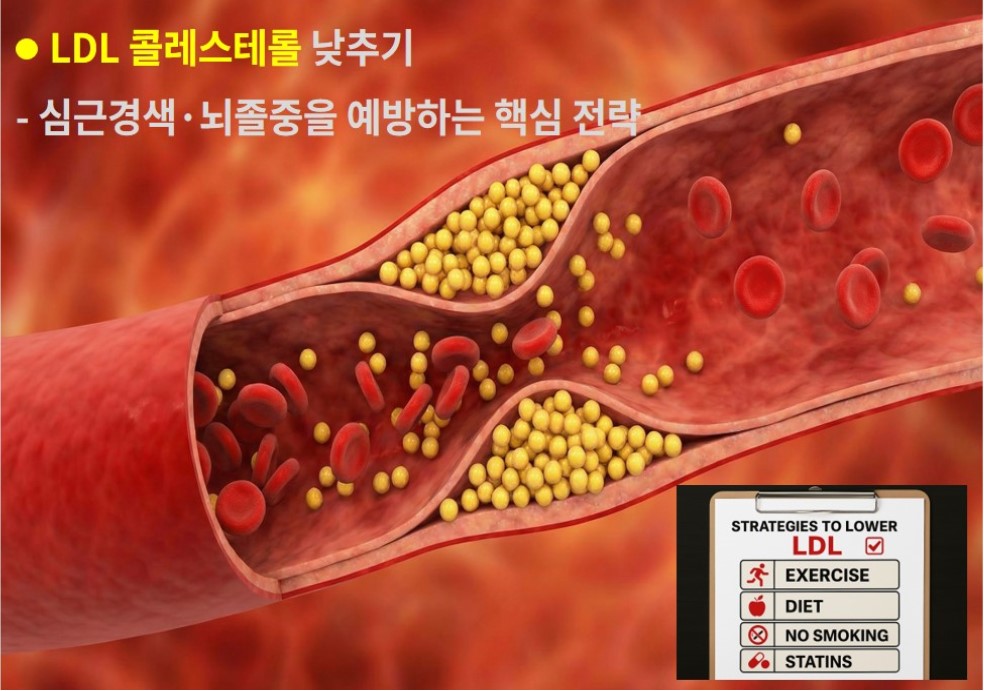
죽상동맥경화증(atherosclerosis)은 다음과 같은 과정으로 서서히 진행됩니다.
LDL-C 혈관 침착 → 산화 → 염증 반응 → 섬유화·석회화 → 플라크 형성 → 혈관 협착 또는 폐색
이 과정이 지속되면 다음과 같은 질환으로 이어질 수 있습니다.
-
협심증 및 심근경색
-
뇌경색·뇌출혈
-
말초동맥 질환 – 보행 시 다리 통증 (파행, claudication)
즉, LDL-C가 높다는 것은 혈관 위험이 이미 조용히 진행되고 있다는 의미입니다.
문제는 “위험의 존재 여부”가 아니라, “언제 사건이 발생하느냐”에 가깝습니다.
2️⃣ HDL-C를 높이는 전략이 효과적이지 않았던 이유
HDL-C은 단일 입자가 아니라 기능과 크기가 서로 다른 입자들의 집합입니다.
HDL-C가 ‘좋은 콜레스테롤’로 불렸던 이유는
일부 HDL-C 입자가 혈액 속에 쌓인 콜레스테롤을 다시 간으로 보내는 역콜레스테롤 수송 기능을 수행하고,
또한 항염증·항산화 작용을 통해 혈관을 보호하는 역할을 하는 것으로 알려졌기 때문입니다(Rohatgi et al., 2021).
이에 따라 ‘HDL 수치만 올리면 혈관 질환을 예방할 수 있다’는 단순한 가설을 바탕으로 다음 약물들이 개발되었습니다.
-
니아신 (niacin, 비타민 B3)
-
CETP (Cholesteryl-Ester Transfer Protein) 억제제 (부작용으로 개발 중단)
-
ApoA1 기반 요법 (HDL-C 기능 자체를 강화하려는 시도)
이 전략으로 HDL 수치를 높일 수 있었음에도, 심근경색, 뇌졸중, 심혈관 사망률을 감소시키지 못했습니다 (Gibson et al., 2024).
특히 이미 LDL-C가 잘 조절된(60–80 mg/dL) 환자에서는 HDL-C를 추가로 올려도 추가 이득이 거의 없었습니다 (Gibson et al. 2024).
결론은 비교적 명확합니다.
HDL-C 수치가 높아지는 것과 HDL 기능이 정상적으로 작동하는 것은 전혀 다른 문제이다
즉, HDL-C를 ‘기능성 지표’로 보기에는 아직 과학적으로 미흡합니다 (Ballantyne and Nambi, 2024; Rohatgi et al., 2021; von Eckardstein et al., 2023).
BOX 1. 높은 HDL 수치를 신뢰 못하는 최신 과학적 증거
⚠ 만성 염증 질환에서는 ‘HDL 기능 저하’가 나타납니다.
HDL-C 수치가 정상 또는 높더라도 염증성 질환이나 산화 스트레스 환경 (예: 당뇨병, 자가면역질환, 만성신장질환 등)에서는 HDL 입자가 제 역할을 하지 못하고 오히려 기능이 손상될 수 있습니다.
이러한 ‘기능 저하 HDL(dysfunctional HDL)’이 죽상동맥경화와 혈관질환의 새로운 기전적 위험요인이 될 수 있습니다 (Rosenson et al., 2016).
⚠ 지나치게 높은 HDL-C는 오히려 위험 신호일 수 있습니다.
관상동맥질환(CAD)을 앓고 있는 환자들을 대상으로 한 연구 (Liu et al., 2022)에 따르면, HDL-C 수치가 80 mg/dL 이상으로 높은 경우, 오히려 심혈관 사망률이 증가하는 경향이 관찰되었습니다. 이 결과는 “HDL은 무조건 높을수록 좋다”는 기존 인식에 의문을 던집니다.
3️⃣ 반대로 LDL-C를 낮추는 전략은 일관되게 성공하였다.
LDL-C 감소는 단순한 수치 조절이 아니라: 심근경색 ↓ · 뇌졸중 ↓ · 사망률 ↓
(1) 스타틴(statins)
-
1차 치료제로 선택
-
간에서 콜레스테롤을 생성하는 효소 (HMG CoA)를 억제함으로써, 혈중 LDL 콜레스테롤 수치를 30~60%까지 낮춤. 또한 간세포 표면의 LDL 수용체를 증가시켜 혈액 속 LDL-C를 더 많이 제거함
-
심근경색, 뇌졸중, 사망률까지 줄이는 효과가 일관되게 입증됨(Cannon et al., 2004; Sacks, 1997)
(2) 에제티미브(ezetimibe)
-
소장에서 콜레스테롤 흡수를 억제
-
스타틴만으로 목표 수치에 도달하지 못할 경우, 병용하면 LDL-C를 추가로 15~25% 더 낮출 수 있음
-
실제로 심혈관 사건이 더 줄어든 것으로 나타남 (Cannon et al., 2015)
(3) PCSK9 억제제(예: evolocumab, alirocumab)
-
간세포 표면의 LDL 수용체 분해를 억제해서 혈중 LDL-C를 추가로 낮출 수 있음
-
대규모 연구에서 심근경색과 뇌졸중 발생률 감소 효과가 명확히 입증됨 (Toth et al., 2022)
(4) 다른 대안, 보조 옵션
- 간에서 LDL 콜레스테롤 합성을 유전자 수준에서 억제하는 siRNA 기반 주사제 **인클리시란(inclisiran)**
- 스타틴 복용이 어렵거나 근육 관련 부작용이 있는 경우 사용할 수 있는 bempedoic acid와 같은 약물 (Garwood et al., 2025).
LDL-C가 내려간 만큼, 심혈관 위험도 함께 낮아진다.
4️⃣ LDL-C를 낮추는 전략: 생활습관 + 필요 시 약물 병행
(1) 생활습관 개선
✔ 식습관
-
포화지방, 가공식품, 트랜스지방 줄이기
-
식이 섬유 (통곡물, 콩류, 채소류, 과일, 견과류, 씨앗류) 섭취 확대
-
지중해식 식단 추천 (관련 글 보기).
✔ 운동
-
빠르게 걷기, 수영, 자전거 등 유산소 운동 주 3~5회
-
HDL-C 상승보다 LDL-C 감소와 혈관 기능 개선에 효과적
✔ 금연
-
흡연은 산화된 LDL-C 수치를 높여 죽상경화 플라크 형성을 촉진하고 HDL 기능도 억제하는 혈관 질환의 주요 위험 요인임 (Ambrose & Barua 2004)
→ 흡연자라면 LDL 관리 이전에 금연이 우선입니다.
(2) 약물 치료
생활습관의 개선으로 LDL-C를 일정 수준으로 낮추지 못하면 추가로 약물 치료가 필요할 수 있습니다 (전문의 처방).
-
스타틴 계열: 1차 선택
-
에제티미브 목표 미달 시 추가
-
PCSK9 억제제, bempedoic acid 등: 고위험군이나 조절 실패 시 고려
-
기저 질환 관리도 병행 필수 (고혈압, 당뇨, 비만, 대사증후군 등)
👉 LDL 목표 수치는 다음과 같습니다:
-
심혈관 질환 또는 고위험군: 70mg/dL 미만 (일부 전문가는 55mg/dL 미만 권장)
-
일반 성인: 100mg/dL 미만 유지
🎯 결론
핵심 메시지: LDL을 낮추십시오.
HDL은 보조적 참고지표일 뿐이며, LDL-C가 낮을수록 심근경색과 뇌졸중 위험은 확실하게 줄어듭니다.
식단, 운동, 금연, 그리고 필요 시 약물치료를 통해 LDL-C를 목표 범위까지 낮추는 것이 중장년기 혈관 건강을 지키는 가장 근거 기반적이며 효과적인 전략입니다.
또한, 정기적인 혈액검사를 통해 지질 프로필 등 건강지표들을 지속적으로 모니터링하는 것이 관리의 중요한 부분입니다.
📚 참고문헌 보기
Ambrose, J. A., & Barua, R. S. (2004). The pathophysiology of cigarette smoking and cardiovascular disease: an update. Journal of the American College of Cardiology, 43(10), 1731-1737.
Cannon, C. P., Blazing, M. A., Giugliano, R. P., McCagg, A., White, J. A., Theroux, P., ... & Califf, R. M. (2015). Ezetimibe added to statin therapy after acute coronary syndromes. New England Journal of Medicine, 372(25), 2387-2397.
Cannon, C. P., Braunwald, E., McCabe, C. H., Rader, D. J., Rouleau, J. L., Belder, R., ... & Skene, A. M. (2004). Intensive versus moderate lipid lowering with statins after acute coronary syndromes. New England Journal of Medicine, 350(15), 1495-1504.
Corliss, J. (2024). Rethinking HDL cholesterol. Harvard Health Publishing.
Garwood, C. L., Cabral, K. P., Brown, R., & Dixon, D. L. (2025). Current and emerging PCSK9‐directed therapies to reduce LDL‐C and ASCVD risk: A state‐of‐the‐art review. Pharmacotherapy, 45(1), 54-65.
Gibson, C. M., Duffy, D., Korjian, S., Bahit, M. C., Chi, G., Alexander, J. H., ... & Harrington, R. A. (2024). Apolipoprotein A1 infusions and cardiovascular outcomes after acute myocardial infarction. New England Journal of Medicine, 390(17), 1560-1571.
Liu, C., Dhindsa, D., Almuwaqqat, Z., Ko, Y. A., Mehta, A., Alkhoder, A. A., ... & Quyyumi, A. A. (2022). Association between high-density lipoprotein cholesterol levels and adverse cardiovascular outcomes in high-risk populations. JAMA Cardiology, 7(7), 672-680.
Madsen, C. M., Varbo, A., & Nordestgaard, B. G. (2021). Novel insights from human studies on the role of high-density lipoprotein in mortality and noncardiovascular disease. Arteriosclerosis, Thrombosis, and Vascular Biology, 41(1), 128-140.
März, W., Kleber, M. E., Scharnagl, H., Speer, T., Zewinger, S., Ritsch, A., ... & Laufs, U. (2017). HDL cholesterol: reappraisal of its clinical relevance. Clinical Research in Cardiology, 106(9), 663-675.
Nicholls, S., & Lundman, P. (2004). The emerging role of lipoproteins in atherogenesis: beyond LDL cholesterol. Seminars in vascular medicine, 4(02), 187-195.
Pirillo, A., Casula, M., Olmastroni, E., Norata, G. D., & Catapano, A. L. (2021). Global epidemiology of dyslipidaemias. Nature Reviews Cardiology, 18(10), 689-700.
Razavi, A. C., Jain, V., Grandhi, G. R., Patel, P., Karagiannis, A., Patel, N., ... & Mehta, A. (2024). Does elevated high-density lipoprotein cholesterol protect against cardiovascular disease? The Journal of Clinical Endocrinology & Metabolism, 109(2), 321-332.
Rohatgi, A., Westerterp, M., Von Eckardstein, A., Remaley, A., & Rye, K. A. (2021). HDL in the 21st century: a multifunctional roadmap for future HDL research. Circulation, 143(23), 2293-2309.
Rosenson, R. S., Brewer Jr, H. B., Ansell, B. J., Barter, P., Chapman, M. J., Heinecke, J. W., ... & Webb, N. R. (2016). Dysfunctional HDL and atherosclerotic cardiovascular disease. Nature Reviews Cardiology, 13(1), 48-60.
Sacks, F. M. (1997). The effect of pravastatin on coronary events after myocardial infarction in patients with average cholesterol levels. New England Journal of Medicine, 336, 961-962.
Toth, P. P., Bray, S., Villa, G., Palagashvili, T., Sattar, N., Stroes, E. S., & Worth, G. M. (2022). Network meta‐analysis of randomized trials evaluating the comparative efficacy of lipid‐lowering therapies added to maximally tolerated statins. Journal of the American Heart Association, 11(18), e025551.
von Eckardstein, A., Nordestgaard, B. G., Remaley, A. T., & Catapano, A. L. (2023). High-density lipoprotein revisited: biological functions and clinical relevance. European Heart Journal, 44(16), 1394-1407.
World Health Organization. (2021). Noncommunicable diseases: risk factors. The Global Health Observatory. https://www.who.int/data/gho/data/themes/topics/topic-details/GHO/ncd-risk-factors
Zheutlin, A. R., Jacobs, J. A., & Bress, A. P. (2025). High-density lipoprotein cholesterol and statin use among US adults with intermediate 10-year predicted ASCVD risk. JACC: Advances, 101725.
Cannon, C. P., Blazing, M. A., Giugliano, R. P., McCagg, A., White, J. A., Theroux, P., ... & Califf, R. M. (2015). Ezetimibe added to statin therapy after acute coronary syndromes. New England Journal of Medicine, 372(25), 2387-2397.
Cannon, C. P., Braunwald, E., McCabe, C. H., Rader, D. J., Rouleau, J. L., Belder, R., ... & Skene, A. M. (2004). Intensive versus moderate lipid lowering with statins after acute coronary syndromes. New England Journal of Medicine, 350(15), 1495-1504.
Corliss, J. (2024). Rethinking HDL cholesterol. Harvard Health Publishing.
Garwood, C. L., Cabral, K. P., Brown, R., & Dixon, D. L. (2025). Current and emerging PCSK9‐directed therapies to reduce LDL‐C and ASCVD risk: A state‐of‐the‐art review. Pharmacotherapy, 45(1), 54-65.
Gibson, C. M., Duffy, D., Korjian, S., Bahit, M. C., Chi, G., Alexander, J. H., ... & Harrington, R. A. (2024). Apolipoprotein A1 infusions and cardiovascular outcomes after acute myocardial infarction. New England Journal of Medicine, 390(17), 1560-1571.
Liu, C., Dhindsa, D., Almuwaqqat, Z., Ko, Y. A., Mehta, A., Alkhoder, A. A., ... & Quyyumi, A. A. (2022). Association between high-density lipoprotein cholesterol levels and adverse cardiovascular outcomes in high-risk populations. JAMA Cardiology, 7(7), 672-680.
Madsen, C. M., Varbo, A., & Nordestgaard, B. G. (2021). Novel insights from human studies on the role of high-density lipoprotein in mortality and noncardiovascular disease. Arteriosclerosis, Thrombosis, and Vascular Biology, 41(1), 128-140.
März, W., Kleber, M. E., Scharnagl, H., Speer, T., Zewinger, S., Ritsch, A., ... & Laufs, U. (2017). HDL cholesterol: reappraisal of its clinical relevance. Clinical Research in Cardiology, 106(9), 663-675.
Nicholls, S., & Lundman, P. (2004). The emerging role of lipoproteins in atherogenesis: beyond LDL cholesterol. Seminars in vascular medicine, 4(02), 187-195.
Pirillo, A., Casula, M., Olmastroni, E., Norata, G. D., & Catapano, A. L. (2021). Global epidemiology of dyslipidaemias. Nature Reviews Cardiology, 18(10), 689-700.
Razavi, A. C., Jain, V., Grandhi, G. R., Patel, P., Karagiannis, A., Patel, N., ... & Mehta, A. (2024). Does elevated high-density lipoprotein cholesterol protect against cardiovascular disease? The Journal of Clinical Endocrinology & Metabolism, 109(2), 321-332.
Rohatgi, A., Westerterp, M., Von Eckardstein, A., Remaley, A., & Rye, K. A. (2021). HDL in the 21st century: a multifunctional roadmap for future HDL research. Circulation, 143(23), 2293-2309.
Rosenson, R. S., Brewer Jr, H. B., Ansell, B. J., Barter, P., Chapman, M. J., Heinecke, J. W., ... & Webb, N. R. (2016). Dysfunctional HDL and atherosclerotic cardiovascular disease. Nature Reviews Cardiology, 13(1), 48-60.
Sacks, F. M. (1997). The effect of pravastatin on coronary events after myocardial infarction in patients with average cholesterol levels. New England Journal of Medicine, 336, 961-962.
Toth, P. P., Bray, S., Villa, G., Palagashvili, T., Sattar, N., Stroes, E. S., & Worth, G. M. (2022). Network meta‐analysis of randomized trials evaluating the comparative efficacy of lipid‐lowering therapies added to maximally tolerated statins. Journal of the American Heart Association, 11(18), e025551.
von Eckardstein, A., Nordestgaard, B. G., Remaley, A. T., & Catapano, A. L. (2023). High-density lipoprotein revisited: biological functions and clinical relevance. European Heart Journal, 44(16), 1394-1407.
World Health Organization. (2021). Noncommunicable diseases: risk factors. The Global Health Observatory. https://www.who.int/data/gho/data/themes/topics/topic-details/GHO/ncd-risk-factors
Zheutlin, A. R., Jacobs, J. A., & Bress, A. P. (2025). High-density lipoprotein cholesterol and statin use among US adults with intermediate 10-year predicted ASCVD risk. JACC: Advances, 101725.
※ 본 글은 일반적인 건강 정보를 위한 것이며, 전문 의료 상담이나 진단을 대체하지 않습니다. 건강 문제에 대해서는 반드시 의사와 상담하시기 바랍니다. 전체 면책 조항 보기
